
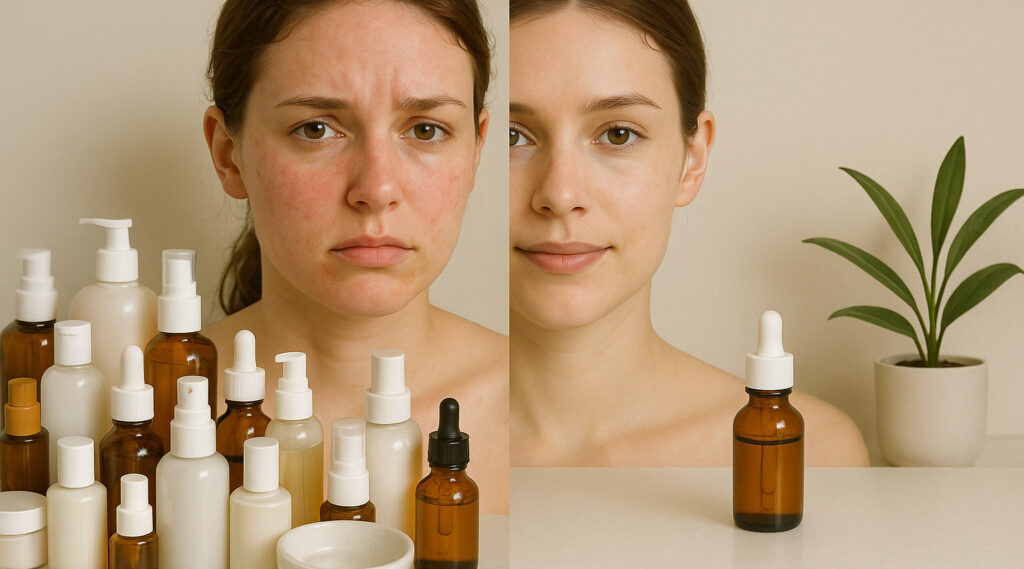
The beauty industry tells a familiar story: more steps, more serums, more glow. But dermatologists, psychologists, and even philosophers have begun to ask a different question: what if we’re doing too much?
What Is Slow Skincare?
Slow skincare is not about neglect. It’s about tuning in—choosing presence over pressure, and function over flash. It’s a return to simplicity—not as lack, but as wisdom.
When More Becomes Too Much
The Skin Barrier: Your First Line of Defense
The stratum corneum—the outermost layer of skin—acts as a protective barrier. It keeps moisture in and irritants out. When overloaded with actives or over-cleansed, this barrier weakens.
“We’re seeing more ‘compromised skin’ than ever before,” notes board-certified dermatologist Dr. Whitney Bowe. “It’s often not because of what’s missing—but because of too much.”
Symptoms of a stressed barrier:
- Redness and flaking
- Tightness after cleansing
- Unexpected breakouts or sensitivity
Studies in dermatology (e.g. Journal of Cosmetic Dermatology, 2021) show that even well-formulated products can disrupt the microbiome when used excessively or layered without purpose.
The Emotional Toll of Over-Care
In a 2019 study on self-image and consumer habits, psychologists found a direct link between beauty product overuse and anxiety scores. More products, more uncertainty. More steps, more performance pressure.
“The body is not an object. It is our means of having a world.” — Maurice Merleau-Ponty
What If Skincare Wasn’t a Mask—But a Moment?
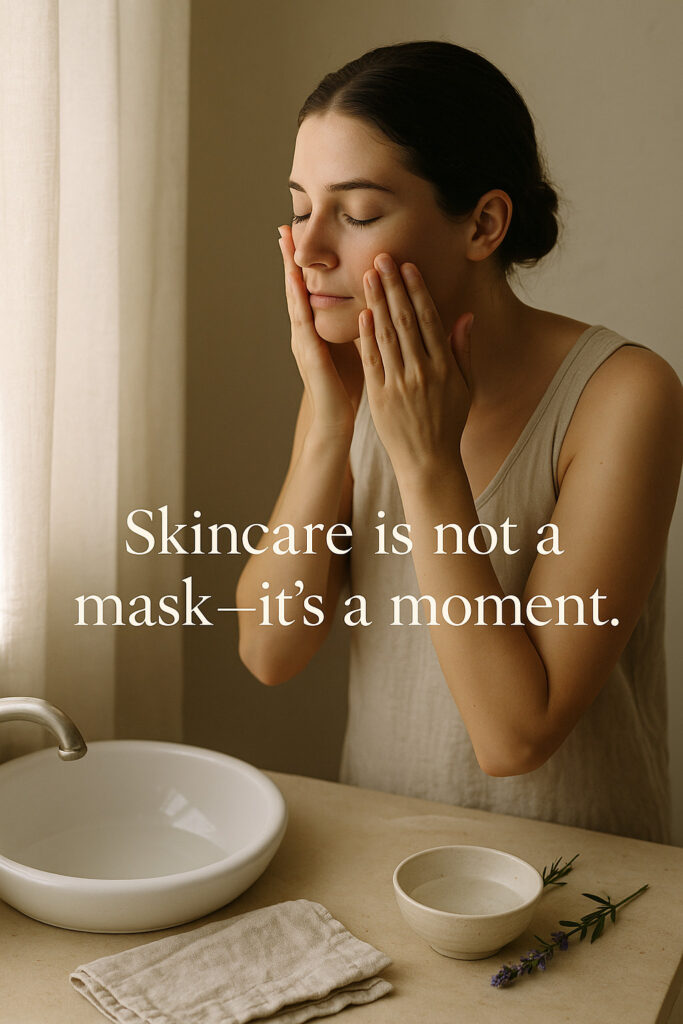
Trends like “skinimalism”—a portmanteau of skin + minimalism—have gained traction. But the slow skincare approach goes further. It prioritizes:
- Long-term barrier health
- Rhythmic rituals over reactive routines
- Fewer products, with intentional ingredients
Skin as a Mirror of Inner Balance
The Ayurvedic Perspective
In Ayurveda, the skin is viewed as a mirror of digestion and nervous system balance—not just something to be managed externally.
Western Science Catches Up
Researchers at Seoul National University (2020) found that skin inflammation is significantly impacted by sleep, stress, and emotional load—even more than skincare ingredients.
A Sample Slow Skincare Routine (Morning + Evening)
Morning
- Splash face with lukewarm water
- Apply 1–2 pumps of antioxidant serum (e.g. niacinamide or vitamin C)
- Use mineral sunscreen (zinc-based)
Evening
- Gently cleanse with non-foaming cream or oil cleanser
- Apply barrier-supportive serum or moisturizer (with ceramides or squalane)
- Optional: light facial massage with clean hands
3–5 steps. That’s it. Let your skin breathe the rest of the time.
“Hada Sabisu”: The Skin Rest Day
Some Japanese beauty experts advocate for “hada sabisu”—a skin rest day. No products, no actives. Just water and patience.
Benefits of skin fasting can:
- Reset natural oil balance
- Reduce reactive breakouts
- Reconnect you with your true skin type
“Sometimes the best thing you can do is nothing,” — Dr. Shereene Idriss
Slow Skincare and the Nervous System
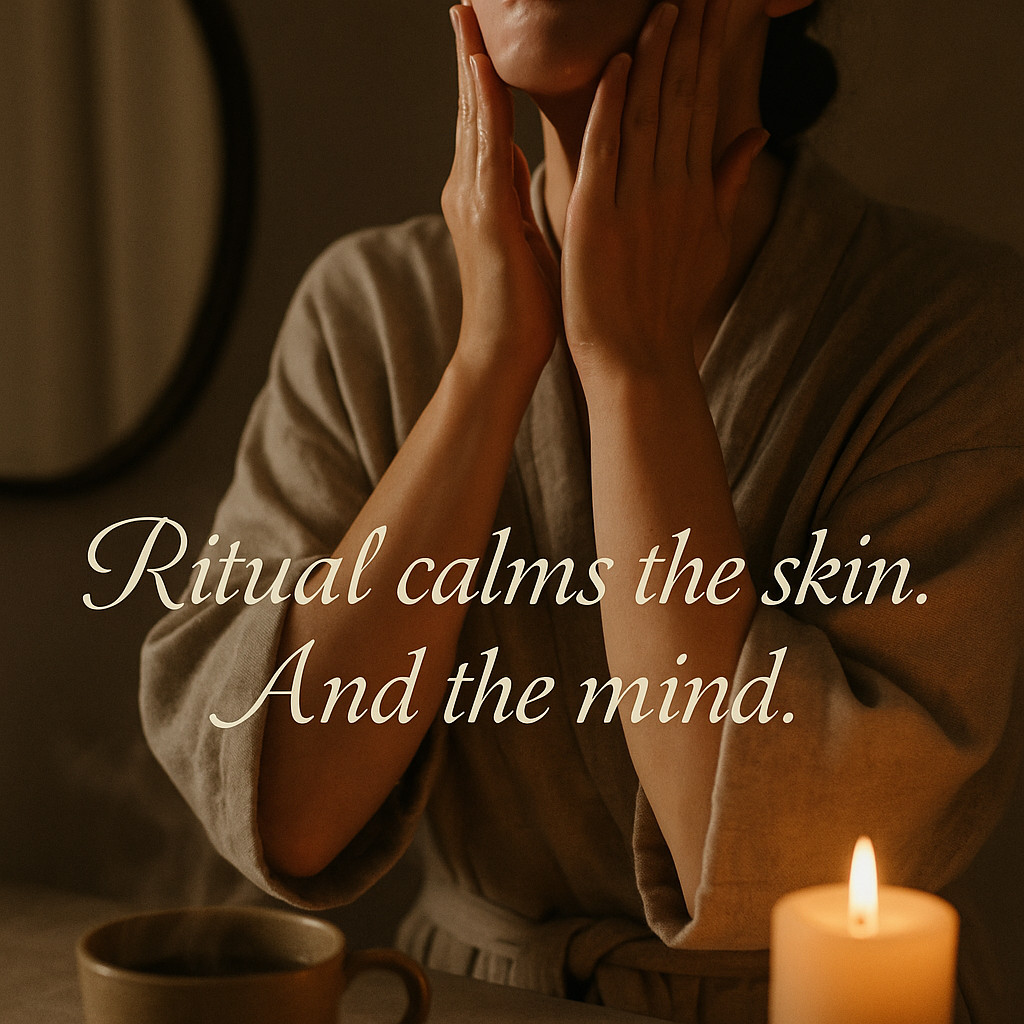
Slow skincare isn’t just about what’s on your shelf—it’s about what’s under your skin:
- Inflammation calms when not provoked by over-exfoliation
- The nervous system relaxes through repetitive, tactile rituals
- Self-perception improves when appearance is not the only goal
A 2022 neuroscience study from the University of Zurich found that slow, intentional beauty rituals can activate the parasympathetic system—encouraging states of rest, connection, and body trust.
Feed Your Skin from Within
Skincare begins far beneath the surface. What we eat becomes what our skin becomes.
Research in Nutrients (2020) confirms that diets rich in omega-3 fatty acids, zinc, antioxidants, and fermented foods help:
- Reduce chronic inflammation
- Strengthen the skin’s lipid barrier
- Balance hormonal fluctuations that affect breakouts
Meanwhile, high-glycemic diets and ultra-processed foods can disrupt sebum production and spike cortisol—a stress hormone that accelerates skin aging.
“The skin is a window into the gut and nervous system.” — Dr. Deanna Minich
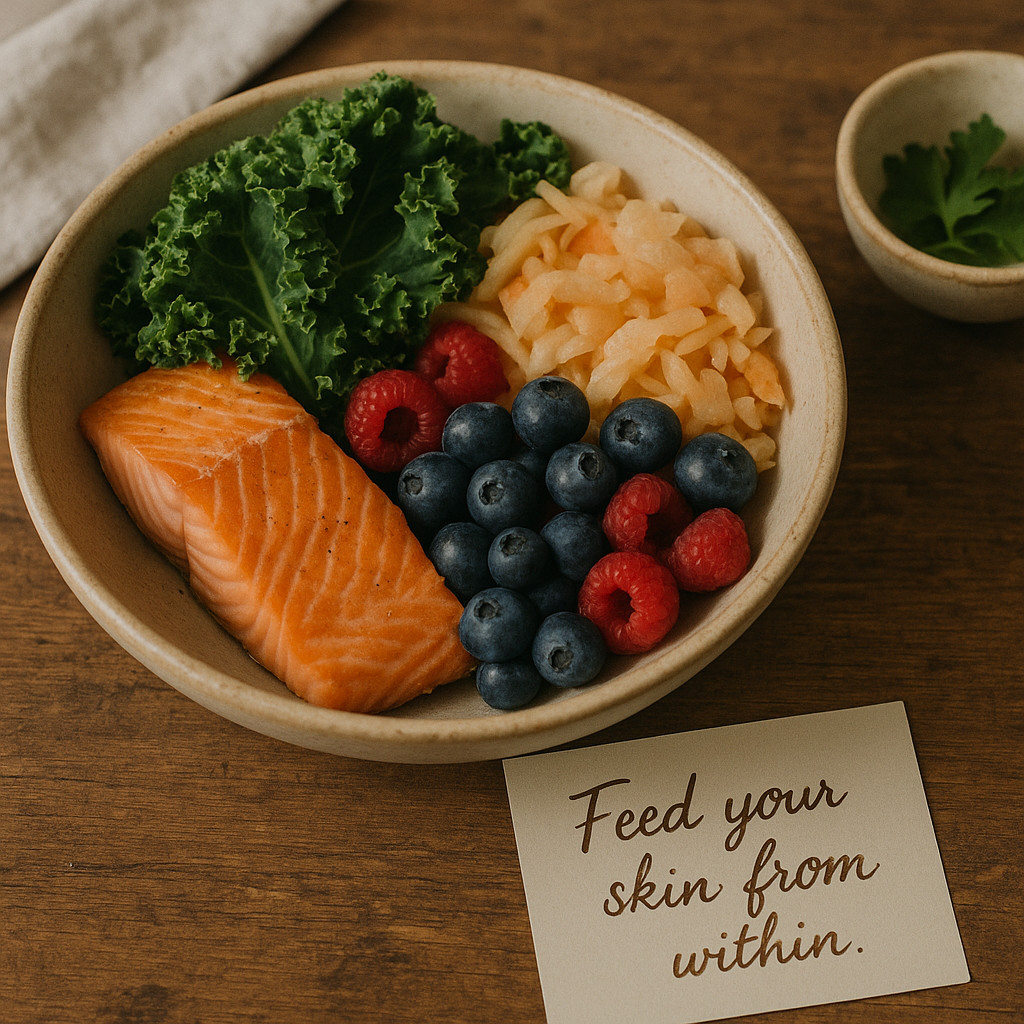
Supportive foods include:
- Wild salmon, chia seeds, walnuts (omega-3s)
- Leafy greens, berries, green tea (antioxidants)
- Fermented foods like sauerkraut, kefir, or miso (gut support)
Conclusion: Trust Takes Time. So Does Skin.
Slow skincare reminds us that health doesn’t come in a jar—it comes in relationship. With our bodies. With our needs. With time.
To slow down is not to give up—it’s to return.
To let the skin speak in its own tempo.
And to listen, finally, without rushing to fix.
What would your skin say if you stopped trying to change it?
Science & Source Corner
- Journal of Cosmetic Dermatology (2021): Microbiome disruption through overuse of actives
- Psychology of Aesthetics (2019): Skincare steps and anxiety correlation
- Seoul Nat. University (2020): Emotional impact on skin inflammation
- Nutrients (2020): Diet and skin barrier integrity
- Dr. Whitney Bowe & Dr. Shereene Idriss: Expert commentary on barrier function & skin fasting
- Dr. Deanna Minich: Gut-skin connection through nutrition
- Ayurveda & Skin (Textbook): Internal balance and dermal health
- Maurice Merleau-Ponty: Body-as-subject philosophy