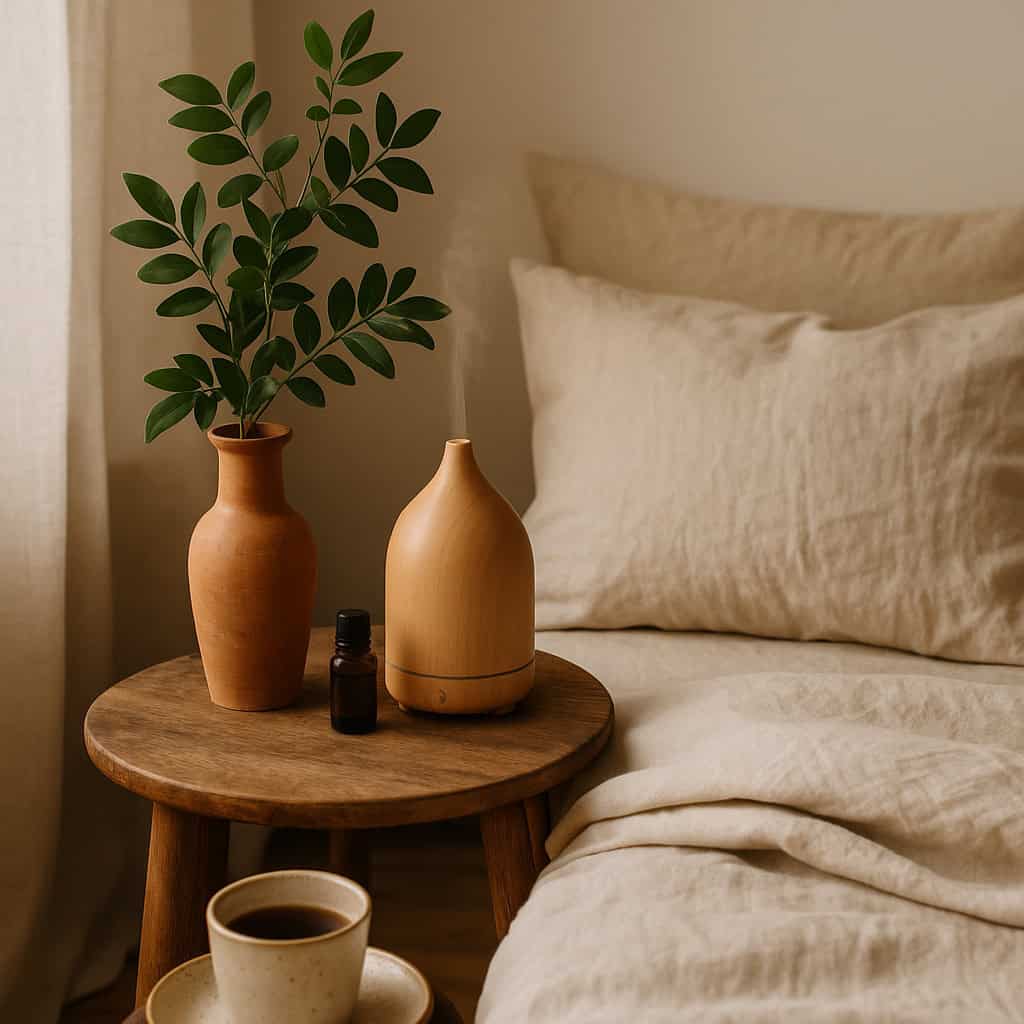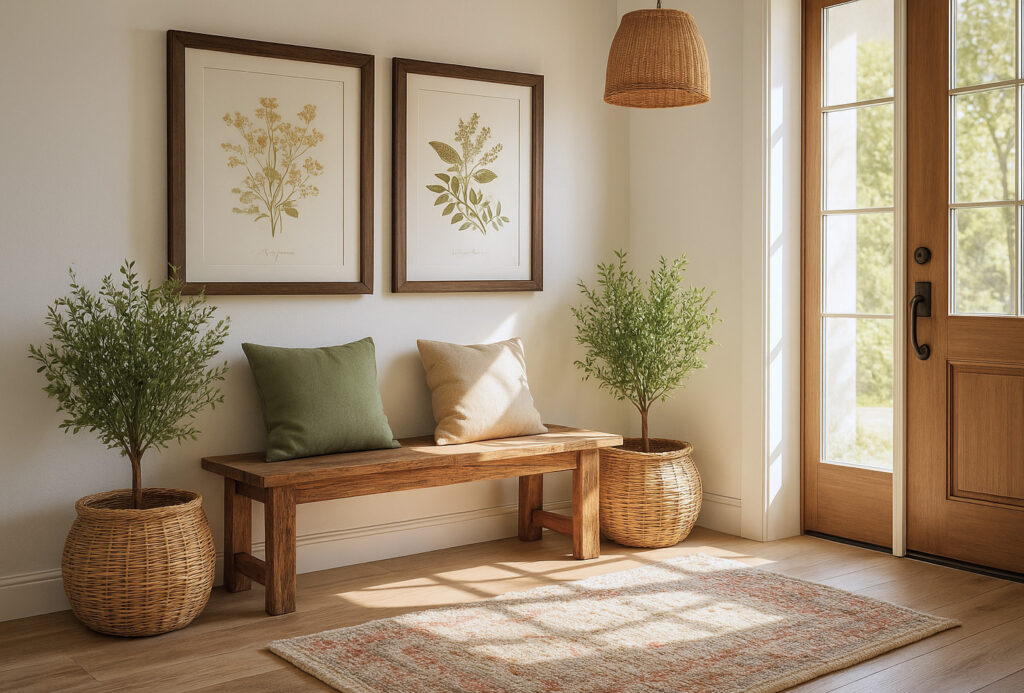
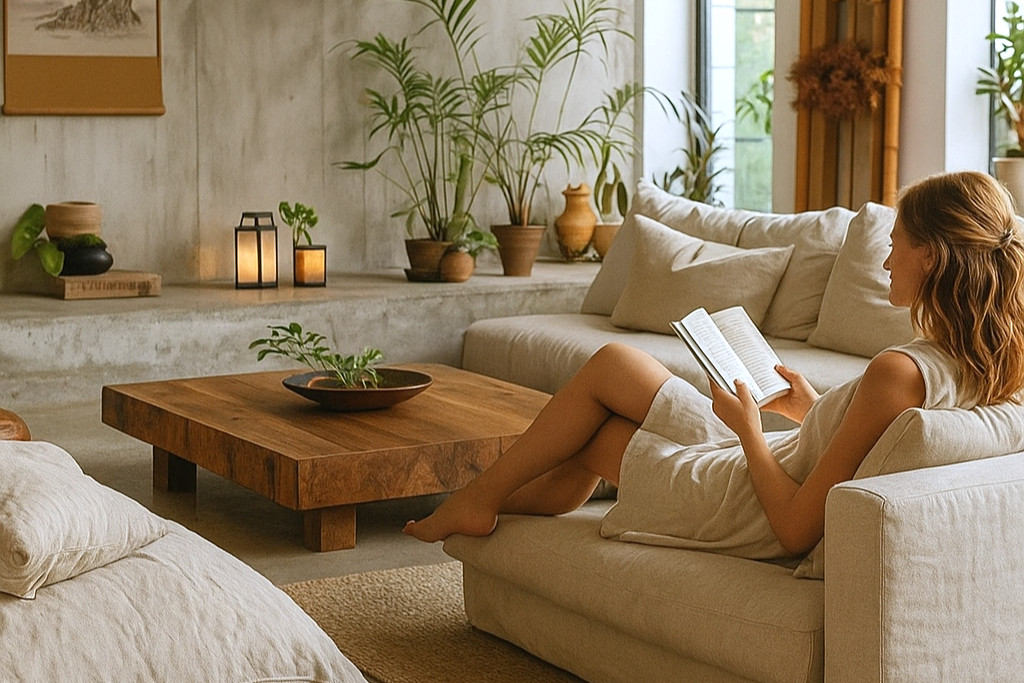
Biophilic design at home isn’t about buying more plants or painting your walls sage green (though, no shame if you did both). It’s about noticing how your space feels. Can you breathe easier? Does your nervous system settle—or spike—when you walk in the door?
The truth is: your home is constantly communicating with your body. Through textures, scents, light, sound. Let’s make sure it’s saying: “you’re safe now.”
Here’s what we’ll explore:
- What biophilic design actually is—and why it matters
- How scent, light, and touch shape your daily mood
- Ideas for creating a mindful home—without perfectionism
- Room-by-room suggestions for grounding elements
- My favorite slow-living home swaps to get started
Ready to let your home breathe again? (It’s cheaper than therapy and doesn’t ghost you.)
What Is Biophilic Design—and Why It Matters
Biophilic design at home means designing with life in mind. And no, that doesn’t mean turning your living room into a jungle. It means integrating natural elements—light, texture, scent, sound—in ways that help your body regulate, rest, and return to itself.
Studies show that materials like raw wood, stone, and breathable textiles (like linen or hemp) can reduce stress. Natural light supports circadian rhythms. Even the presence of greenery boosts cognitive function and emotional resilience.
TL;DR: Nature calms your brain. Your home can too.
The Science of Sensory Connection
Biophilic design at home isn’t an aesthetic—it’s a sensory reset. Let’s break it down:
- Light: Early morning sunlight helps regulate cortisol and melatonin. Open your curtains like it’s a ritual (not a chore).
- Scent: Essential oils like vetiver, rosemary, or citrus can ground or uplift. Natural cleaning products with essential oils support mood—not just hygiene.
- Sound: A soft playlist, birdsong through the window, or even silence can anchor attention. Try turning off background noise and notice what happens.
- Touch: Raw textures (woven baskets, brushed linen, wood grain) cue safety. Your skin knows the difference.
These aren’t luxuries—they’re nervous system hygiene. And no, you don’t need to burn sage unless you truly want to.
Mindful Home Ideas (That Don’t Involve Buying More Stuff)
Biophilic design at home is about small shifts that help your space support your senses.
- Replace synthetic air fresheners with a handmade beeswax candle or essential oil diffuser
- Use one real plant—yes, even if you have a black thumb
- Let natural light in before you turn on any artificial one
- Swap plastic storage baskets for something tactile (woven, clay, fabric)
- Clean with vinegar, castile soap, or low-tox products—it smells different (in a good way)
Mindfulness at home isn’t about aesthetic perfection. It’s about emotional clarity. And being able to find your keys without a meltdown.
Room-by-Room Calm: Simple Ideas for Every Space
Bedroom
- Avoid overhead lighting—use lamps or candles in the evening
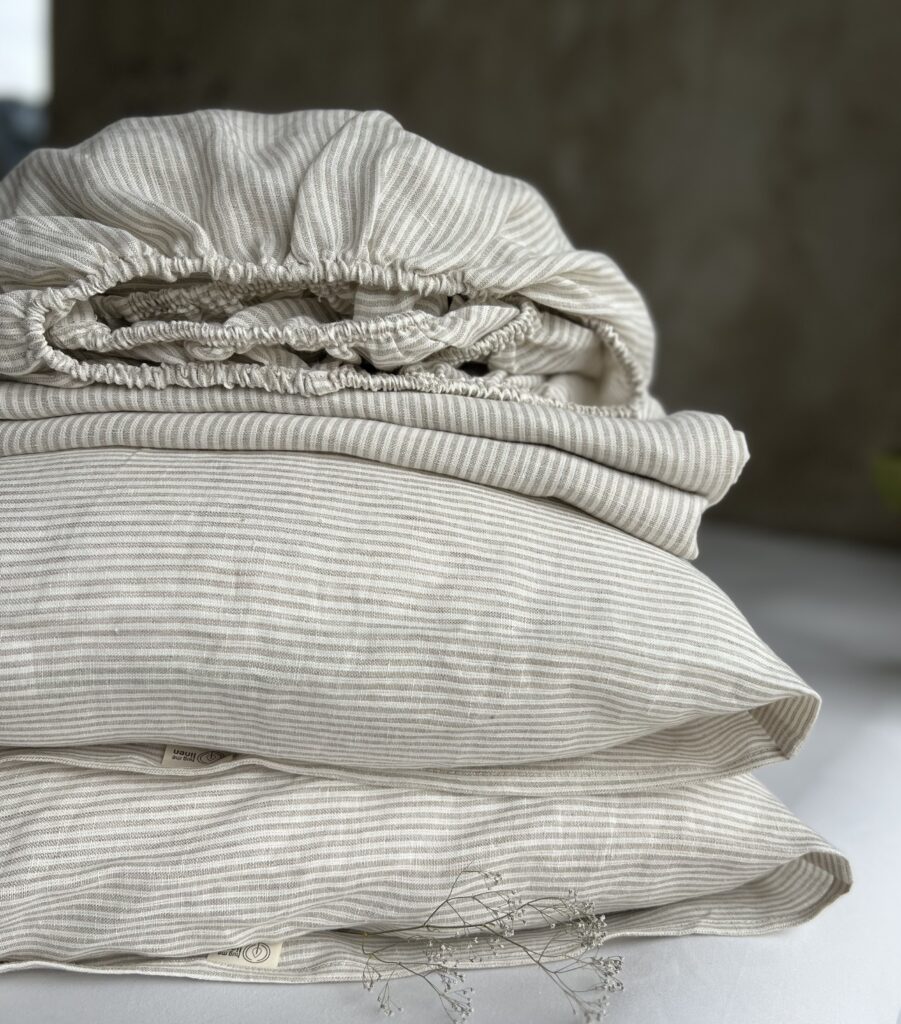
- Natural fiber bedding—like a Hugmelinen duvet cover—supports not only your skin but your sleep rhythms.
- A few drops of lavender or cedar oil on your pillow? Yes please
Kitchen
- Keep countertops clear (less visual noise = more calm)
- Use linen or cotton towels and cloths—it feels better, period
- Choose one ritual: making tea, washing fruit, lighting a candle before eating

Bathroom
- Store bath salts or oils in glass jars—it feels grounding
- Add one plant (ferns love steam!)
- Try dry brushing or washing with a natural fiber cloth
Living Room
- Place a chair near natural light for reading or simply sitting
- Keep a basket with calming rituals: incense, soft textiles, a journal
- Let your objects breathe—leave some surfaces intentionally empty
Slow Home Swaps to Start With
You don’t need to renovate your home to make it more mindful. Start here:
- Lighting: Use warmer bulbs (2700K or lower) and avoid harsh white LEDs
- Cleaning: Switch to unscented or naturally scented products—your nervous system notices
- Textiles: If you buy one thing, let it be a natural linen duvet cover—soft, sensory, and grounding
- Air: Open a window—even for 5 minutes. Every day. Yes, even in winter.
Little by little, your space starts to breathe differently. So do you. And bonus: your space starts to smell less like “busy” and more like “peaceful adult with a secret garden.”
Conclusion: It’s Not About the Stuff
Biophilic design at home isn’t about having the most curated, perfect-looking house. It’s about remembering that you’re an animal—and your home can help you feel more like yourself.
Your 3-Step Mindful Home Reset:
- Let light in before devices
- Choose textures and scents that feel alive
- Add one pause per room (yes, even 30 seconds counts)
👉 No need to overhaul your space. Just soften it. One sense at a time.
Science Corner + Sources
- Daylight & Circadian Rhythms: Huberman Lab Podcast, “Master Your Morning”
- Plants & Cognitive Function: Journal of Environmental Psychology, 2015
- Natural materials & stress response: University of British Columbia, “Nature & Human Well-Being”
- Scent & Emotion Regulation: International Journal of Neuroscience, 2019