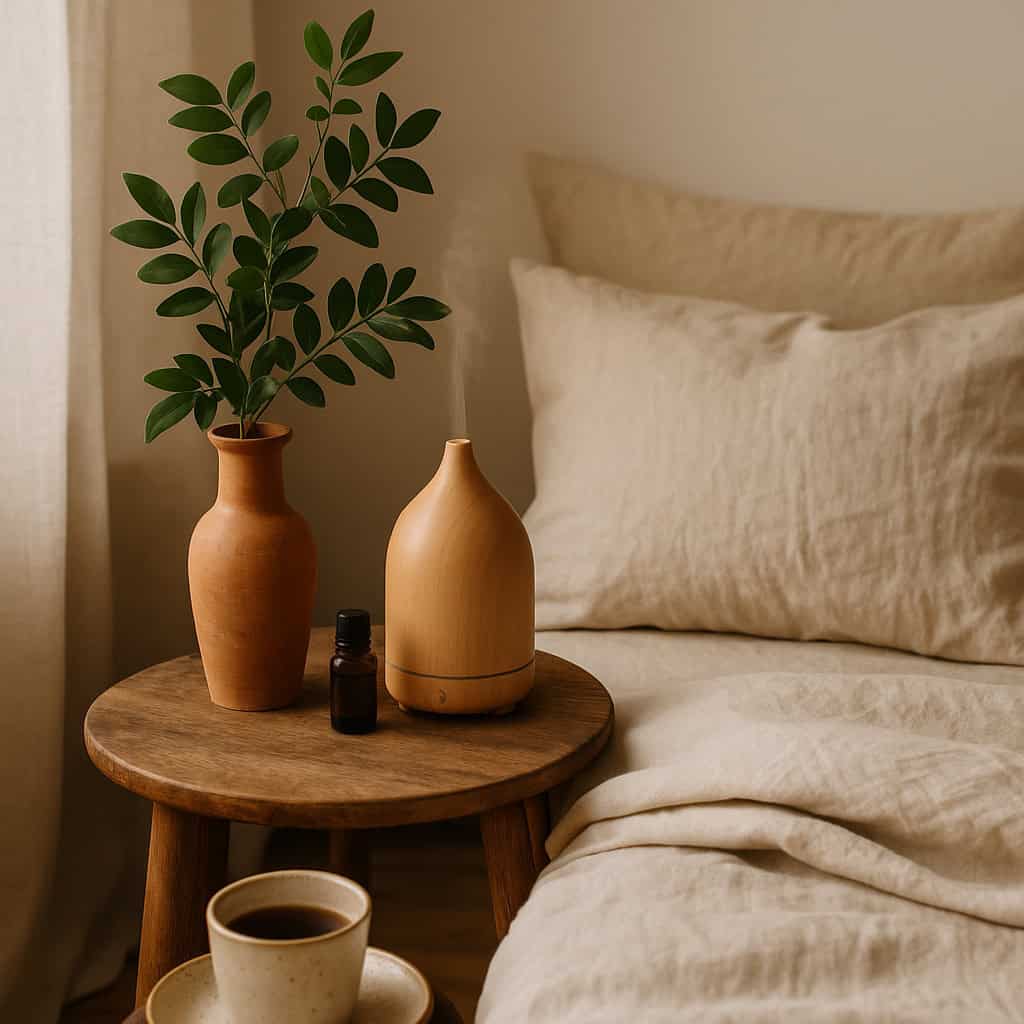
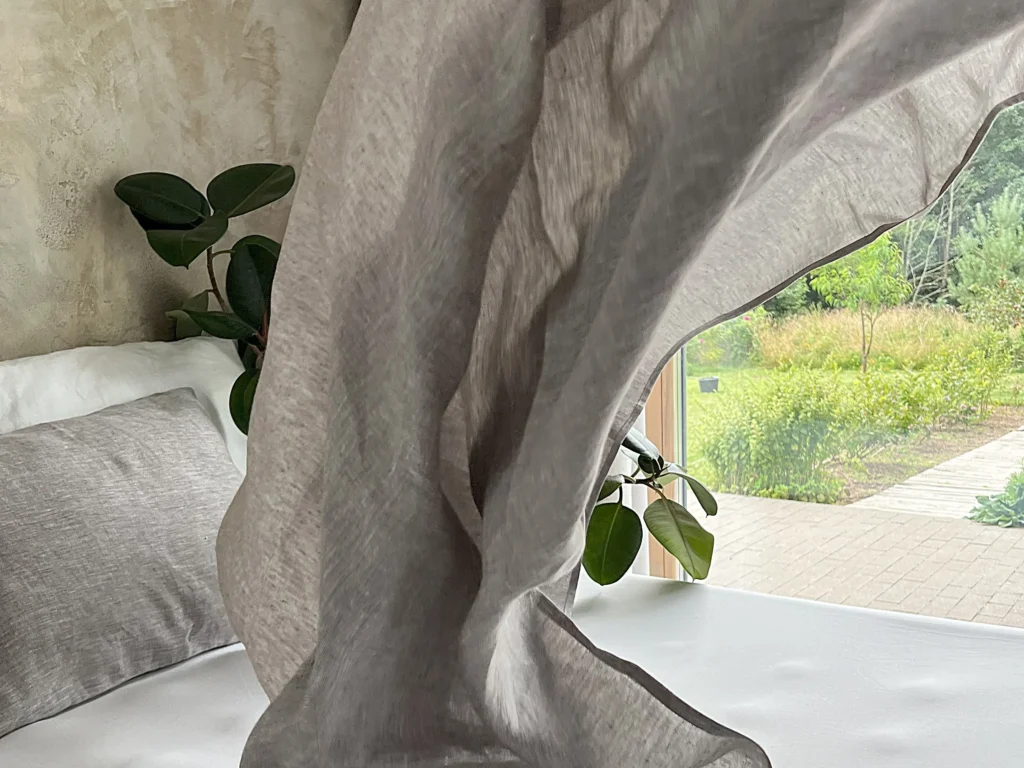
Repetitive motion has been shown to soothe the nervous system, similar to the effects of rocking or deep, rhythmic breathing. Our brains crave predictability in moments of overwhelm—and the act of folding gives just that.
Neuroscientist Dr. Judson Brewer explains that repetitive, mindful behaviors can shift us out of anxiety loops by giving the brain something predictable to latch onto. Folding a blanket, smoothing out a linen sheet, or organizing soft towels gives the body a moment of control and comfort.
It’s not about the towel. It’s about the rhythm.
Folding as Grounding: Your Hands Know Before Your Mind Catches Up
In somatic therapy, grounding often begins with the body. Before the thoughts. Before the stories. When your hands press into soft linen, feeling the weight and wrinkles, your body begins to settle.
Touching a wrinkled herringbone tablecloth or smoothing out a duvet isn’t decoration—it’s self-regulation.
You don’t need a full home makeover to feel calmer. You just need a moment with your hands, your breath, and a familiar fabric.
The Hidden Psychology of Fabric: Why Texture Matters
Ever notice how certain textures instantly feel comforting?
- Linen carries a soft resistance: it’s sturdy, honest, and breathes with you.
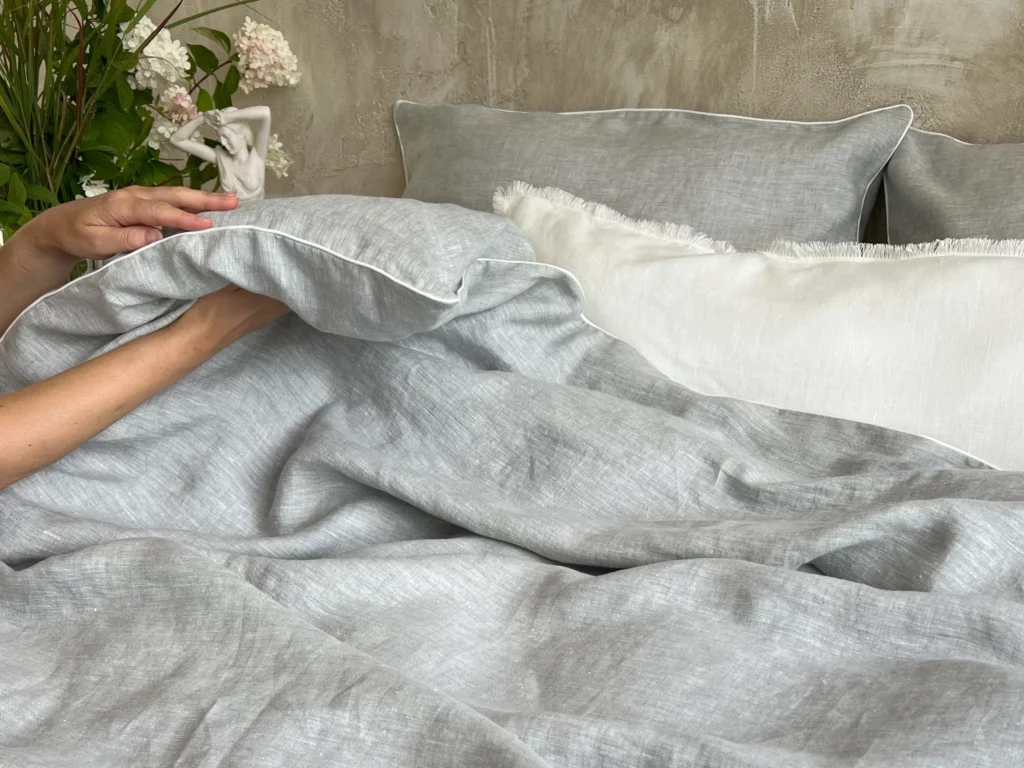
- A striped linen duvet or slightly crumpled towel invites imperfection—and with it, relief.
- Smooth synthetic fabrics, on the other hand, feel cold and emotionally flat.
Choosing natural textiles, especially ones with weight and texture, gives your senses something real. Something human.
This is where Hugmelinen products shine—not because they’re “pretty,” but because they feel alive.
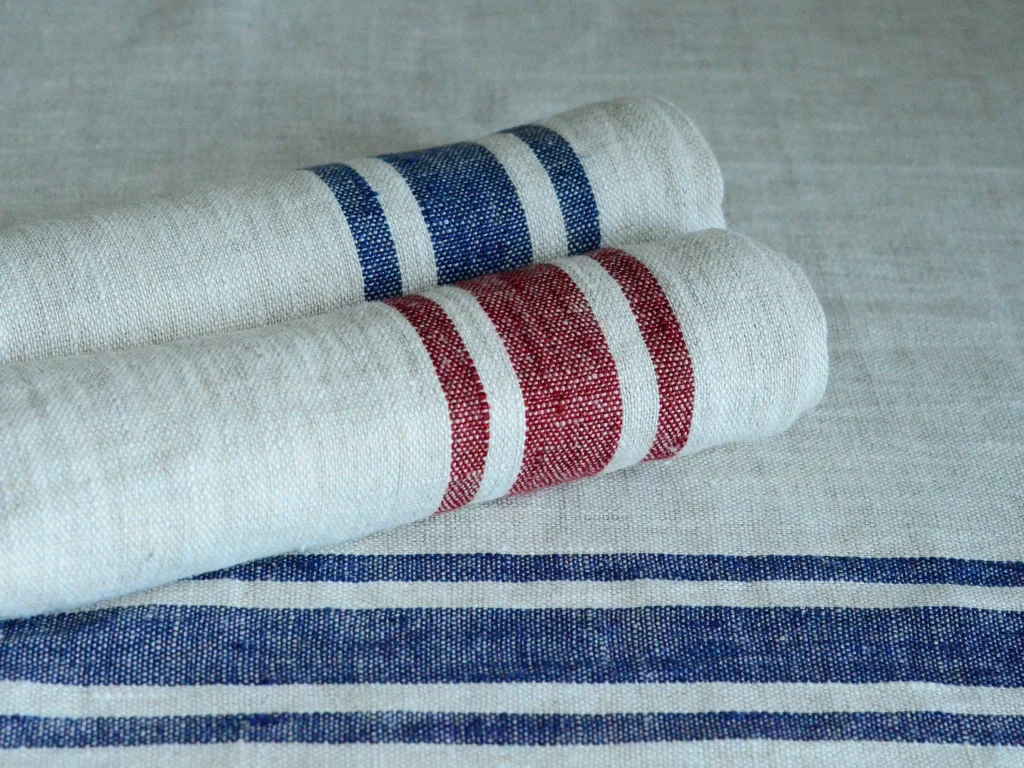
Try folding this striped linen duvet cover at the end of the day. You’ll be surprised what your body remembers.
Ritualizing the Fold: Small Rhythms That Shift Your Mood
You don’t need to declutter the whole house. Just start with one calming gesture:
- Fold a linen towel slowly after a warm bath.
- Smooth out the bedspread each morning, even if no one sees it.
- Refold a linen throw on the couch before you sit down for the evening.
- Iron and fold a Hugmelinen table runner before a slow Sunday meal.
The body learns peace through repetition. Not speed.
Add this moment to your week: a linen ritual that isn’t about perfection—it’s about presence.
Folding as Emotional Recalibration
Think of folding like closing tabs in your brain.
You’re not just tidying fabric. You’re closing loops: a busy day, a racing thought, an unresolved tension. The folds act as bookends to a chaotic story—small physical signals that say, “this is done.”
Psychologist Christine Padesky suggests that sensorimotor rituals (those involving movement and touch) are powerful ways to regulate emotional energy without needing language. That’s why this works.
Even better? You don’t need to “feel like it” to start. The body will lead.
The Joy of Imperfection: Wrinkles, Soft Edges, and Real Life
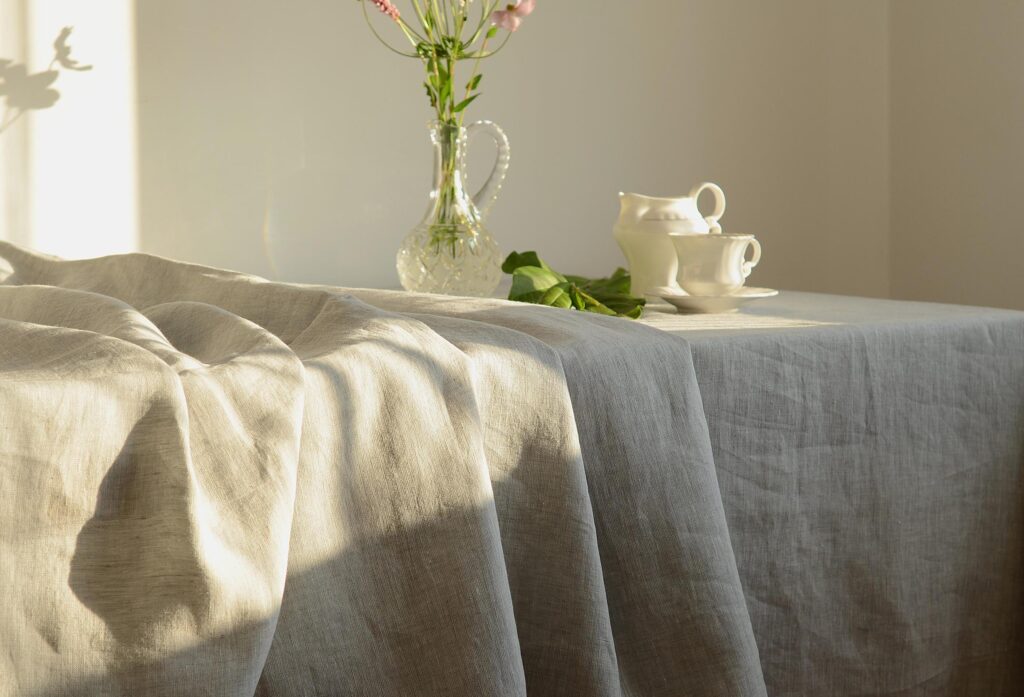
There’s something deeply beautiful about wrinkled linen—not sloppiness, but evidence of use. A story lived.
Your Hugmelinen herringbone tablecloth doesn’t need to be ironed to feel right. In fact, those wrinkles are part of the message: we live here. We slow down here.
Perfection is sterile. Wrinkles are warm.
Let your folding reflect your values: care over control, intention over image.
Make It a Family Ritual: Folding as Connection
Folding can become a shared ritual:
- Involve your child in stacking linen napkins after dinner.
- Ask your partner to help you fold the bed throw every evening.
- Turn on soft music and fold laundry as a form of companionable silence.
Not everything has to be deep. Sometimes, rituals speak loudest in silence.
Add Sensory Anchors: Scent, Sound, and Light
Enhance your folding ritual with soothing cues:
- Use essential oils like cedar or neroli on your linen.
- Fold in soft light—avoid harsh LEDs.
- Play quiet instrumental music or nature sounds.
This way, the act becomes a full-body exhale, not a box to check off.
Ritual Doesn’t Mean Rigid: Let It Be Gentle
There’s no “right” way to fold. The ritual lives in how you show up, not how you stack.
Some evenings, you’ll fold slowly and neatly. Others, it’ll be messy but intentional. That’s the point.
Let the ritual adjust to your energy—not the other way around.
Try This: A Simple Evening Folding Ritual
- Turn off overhead lights.
- Put on something soft (linen robe, socks).
- Pick 1–2 linen items to fold: a pillowcase, towel, or tablecloth.
- Fold slowly. Notice the sound. The texture. The breath.
- Stack or drape them in a way that feels satisfying.
- Let that be enough.
Repeat the next day. Or not. Just knowing this option exists can create relief.
🌿 Want to bring this ritual into your home?
Explore calming textures and weighted softness with:
- Hugmelinen’s natural linen bedding
- Hugmelinen kitchen towels
- Table linens perfect for slow dinners
- Soft linen throws to fold or drape
Let your hands meet calm, not just chores.
Sources :
- Brewer, J. (2021). Unwinding Anxiety.
- Padesky, C. (2012). Mind Over Mood.
- Van der Kolk, B. (2015). The Body Keeps the Score.
- Somatic Experiencing Institute – www.traumahealing.org
- Psychology Today articles on rituals and sensory grounding.