
Your nervous system is wired to respond to stimuli, especially in your immediate environment. When every corner of a room is filled with visual input, your brain has no “resting place.”
According to a 2009 study by UCLA’s Center on Everyday Lives of Families, mothers who described their homes as cluttered had higher cortisol levels throughout the day. Clutter equals chronic stress—and your body knows it even if your mind dismisses it.
It’s not about perfection. It’s about load.
Constant Visual Input Overstimulates the Brain
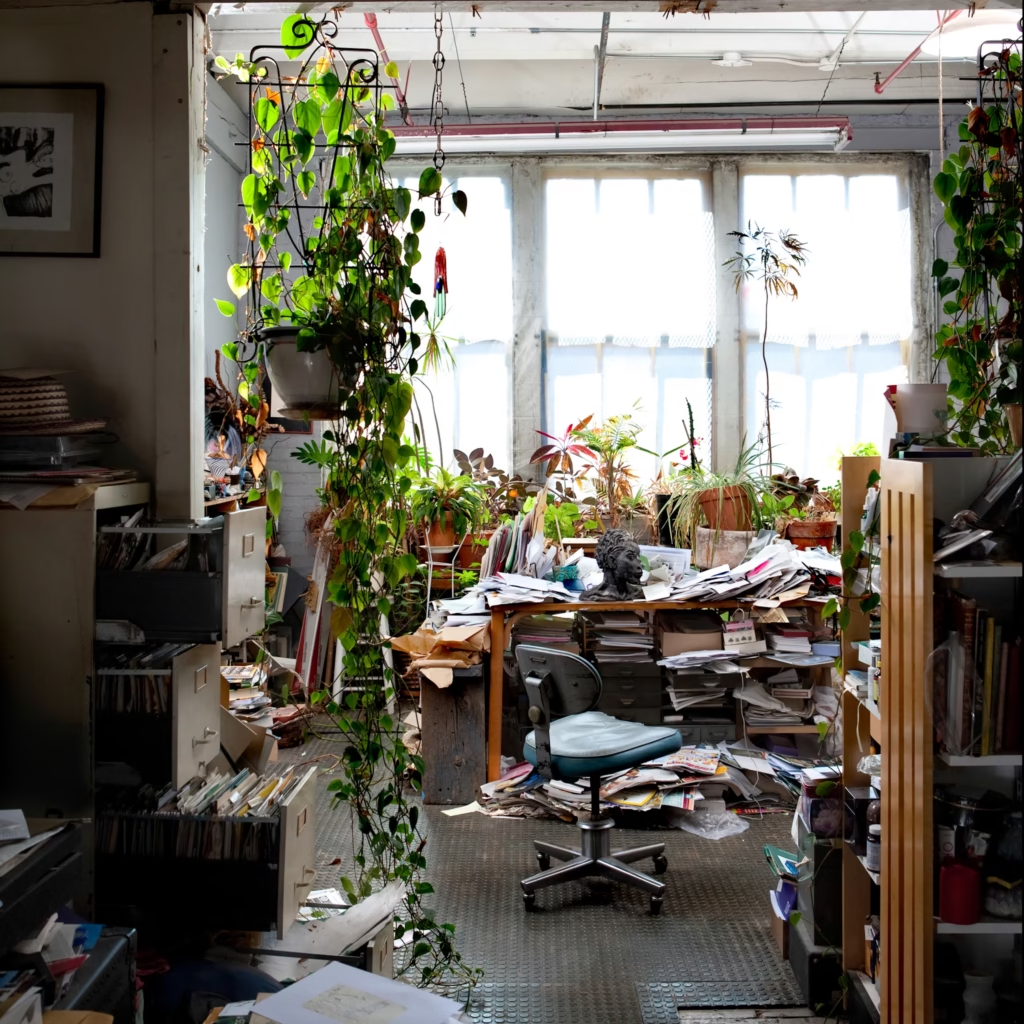
Psychologist Sherrie Bourg Carter, Psy.D., explains in Psychology Today that “clutter bombards our minds with excessive stimuli, causing our senses to work overtime on stimuli that aren’t necessary or important.” That’s why you may feel irritable or anxious without knowing why—it’s your mind trying to filter chaos.
The Emotional Weight of Stuff You’re Not Using
Clutter isn’t just physical. It’s emotional memory. That box you’ve meant to sort for six months? It’s silently saying “you failed.” The broken chair you’ve kept in hopes of fixing? It whispers “unfinished business.”
And so we live among unresolved narratives. Each item left out becomes a to-do, a memory, a little tug on your attention.
This constant low-level stress adds up. It makes it harder to feel joy, harder to rest, and harder to feel proud of your space.
How Clutter Erodes Your Sense of Identity at Home
Your home should reflect who you are now, not just who you were or who you think you “should” be.
Keeping items out of guilt or obligation (the ugly vase from Aunt Joan, the jeans from your thinner self) fractures your emotional connection with the present. And when we lose that connection, our space stops feeling like an ally.
In our article The Quiet Bedroom Formula, we explore how subtle sensory cues can re-anchor us in the present—clutter does the opposite.
What Is a “Breathing Space” at Home?
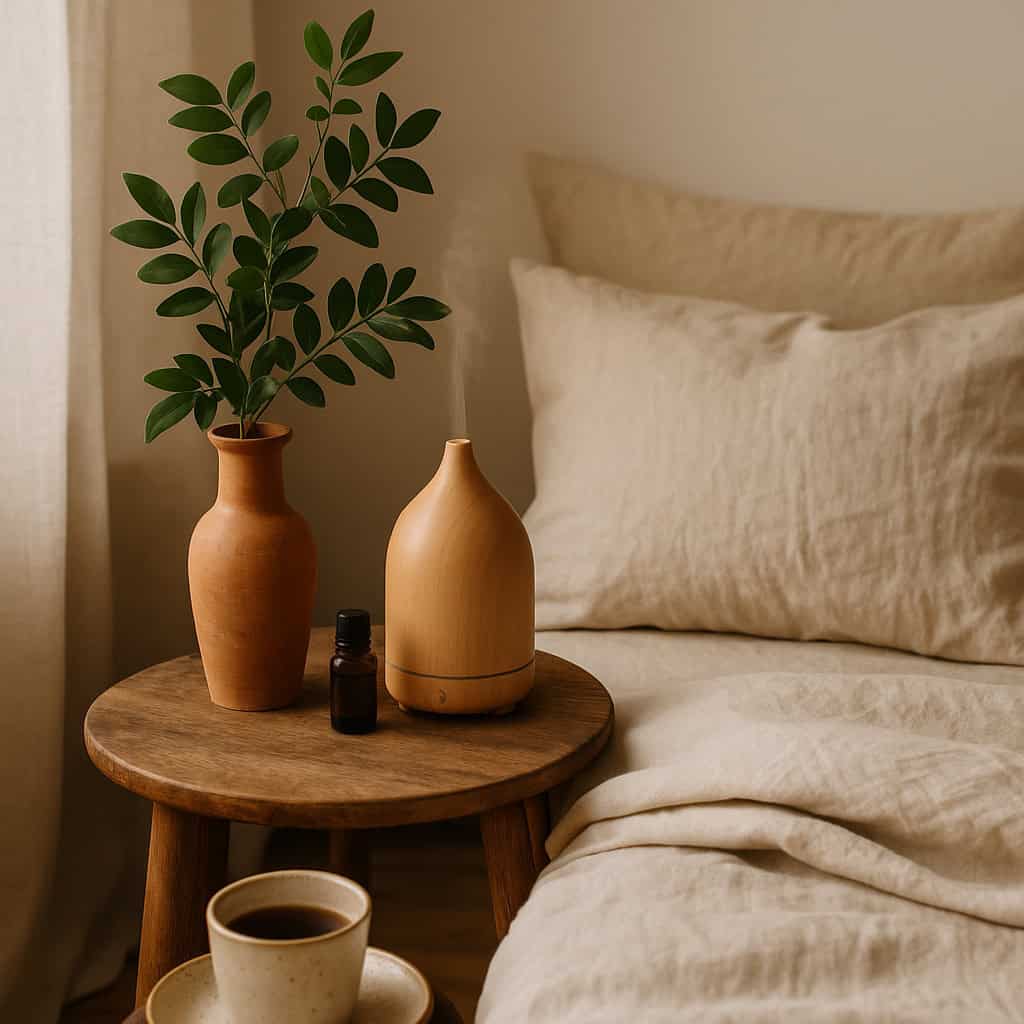
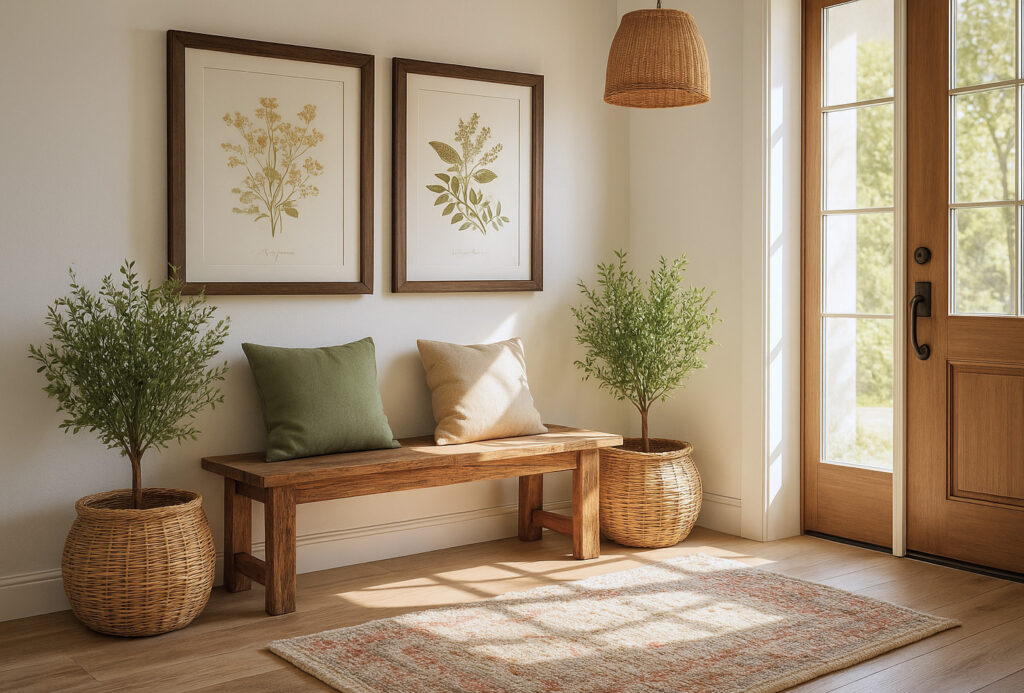
A breathing space is not necessarily empty—it’s intentional. It’s the feeling of softness, openness, and permission to rest.
It’s a corner with a single chair, sunlight, and nothing else. A hallway that isn’t blocked. A kitchen counter with room to cook and think.
Your breathing space should signal safety, not demand attention.
How to Create a Mindful, Clutter-Calm Environment
This isn’t about minimalism. This is about nervous system kindness. Here’s how to start:
Start With Your Eyes
Look around your space. Where does your gaze land first? Is it something calming—or something calling for your attention?
Try removing one item from your most visible surface. Just one. That might be all it takes for your eyes to rest—and your shoulders to drop.
Create One Visual Resting Point per Room
Choose a surface that will always be clear: the nightstand, the coffee table, a shelf. Let your brain know where it can land softly.
You don’t have to declutter everything—just protect one peaceful anchor.
Use the 3-Minute Timer Technique
Set a timer for 3 minutes. Choose one small area (drawer, basket, corner). Let yourself tidy just that. When time’s up, stop.
This keeps you from the “all-or-nothing” trap. Momentum is built slowly, and your nervous system stays on board.
Emotional Reframing: You’re Not Behind
Clutter can trigger shame. But reframing helps. Think of every decluttered surface not as a win against mess, but as an act of nervous system care.
You are not behind. You are reclaiming space—one breath at a time.
Build Habits That Keep Clutter From Creeping Back
You don’t need rigid systems. You need rhythms. Here are a few gentle ones:
- The 5-Minute Evening Sweep: A quick walkthrough of your space before bed, returning items to their homes.
- The In-Basket Rule: Everything that enters the house lands in one spot first (mail, keys, new items)—then gets processed.
- One In, One Out: For every new item, one goes out. It’s a ritual of balance.
These habits are not about control—they’re about protecting your energy.
You Deserve a Home That Breathes With You
Your home doesn’t have to be perfect—it has to support your aliveness. When your environment asks less from you, you feel more like yourself.
Don’t wait for a renovation. A clear shelf, a quiet corner, a gentle habit—that’s where peace begins.