
The skin speaks the language of balance. And yet, modern skincare often shouts. With ten-step routines and potent actives, our skin is asked to do too much, too fast. In slow beauty, the goal is not control—but relationship. One rooted in rhythm, trust, and touch.
Natural face oils—when chosen wisely—can become part of that relationship. They calm inflammation, support the barrier, and bring a tactile stillness to beauty rituals. This isn’t about glow for glow’s sake. It’s about grounded skin that reflects inner steadiness.
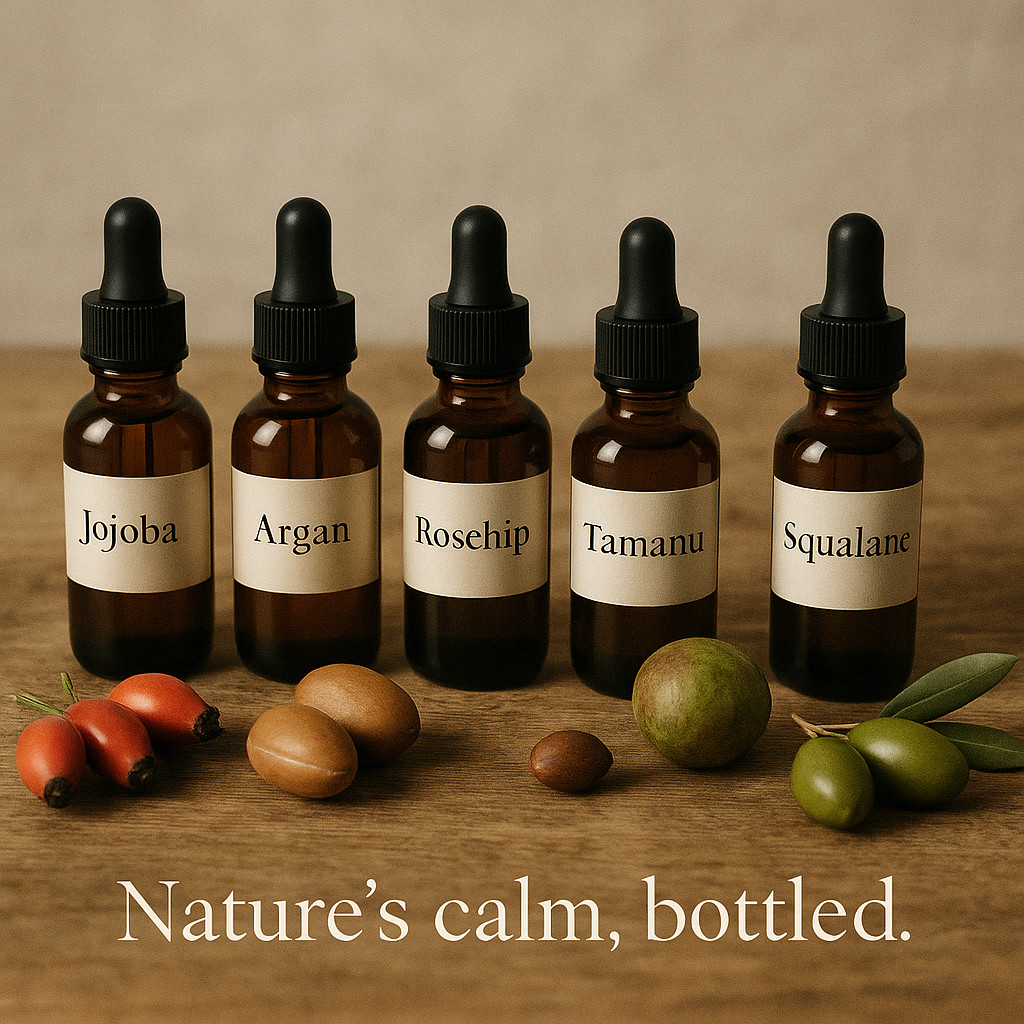
Here are five plant-based oils backed by tradition, research, and sensory experience that help restore calm—both on the skin and beneath it.
Top 5 Most Beneficial Face Oils (According to Science)
Jojoba Oil (Simmondsia chinensis)
Jojoba oil is not technically an oil—it’s a wax ester, nearly identical to the sebum our skin produces naturally. That makes it one of the most biocompatible oils available.
Why it works:
- Helps regulate sebum production
- Non-comedogenic, absorbs quickly
- Antibacterial and anti-inflammatory
Who it’s for: All skin types, especially combination and sensitive
Scent & Texture: Light, neutral scent; silky and quick to absorb
Scientific note: A study in Giornale Italiano di Dermatologia (2013) showed jojoba oil improved skin suppleness and barrier recovery after just 2 weeks of regular use.
Ritual tip: After cleansing, warm 2–3 drops between your hands. Press gently into damp skin. Breathe.
Argan Oil (Argania spinosa)
Often referred to as “liquid gold,” argan oil is cold-pressed from the kernels of the Moroccan argan tree. It’s particularly rich in vitamin E, essential fatty acids, and antioxidants—making it ideal for dry or aging skin.
Why it works:
- Deeply hydrates and softens
- Improves elasticity and skin texture
- Protects against oxidative damage
Who it’s for: Dry, mature, or environmentally stressed skin
Scent & Texture: Mild nutty aroma; silky, mid-weight oil
Scientific note: A 2015 study in Clinical Interventions in Aging found that regular topical application significantly improved skin hydration and elasticity in postmenopausal women.
Ritual tip: Use in the evening after cleansing and misting. Let the warmth of your hands help the oil melt into your skin.
Rosehip Seed Oil (Rosa canina)
Known for its regenerating properties, rosehip seed oil is rich in essential fatty acids and natural vitamin A (retinoic acid). It’s a powerful but gentle ally for tired, dull, or inflamed skin.
Why it works:
- Supports skin regeneration and elasticity
- Evens tone and reduces post-inflammatory marks
- Naturally high in antioxidants
Who it’s for: Dry, mature, or reactive skin
Scent & Texture: Earthy, slightly herbaceous scent; lightweight but nourishing
Scientific note: Clinical trials in International Journal of Cosmetic Science (2015) found significant improvement in crow’s feet and skin smoothness with rosehip application over 8 weeks.
Ritual tip: Use 1–2 drops at night as a final step. Especially supportive during seasonal transitions.
Tamanu Oil (Calophyllum inophyllum)
A deeply therapeutic oil from the South Pacific, tamanu has been used traditionally for wound healing, sunburn relief, and inflammatory skin conditions.
Why it works:
- Strong anti-inflammatory and antimicrobial properties
- Accelerates wound healing
- Calms eczema, acne, and redness-prone skin
Who it’s for: Inflamed, acne-prone, or barrier-damaged skin
Scent & Texture: Distinct nutty-earthy scent; rich and green-hued
Scientific note: Studies published in Phytotherapy Research (2009) confirmed tamanu oil’s ability to promote fibroblast activity and scar reduction.
Ritual tip: Best used as a targeted treatment. Dab onto trouble spots or blend 1 drop with a lighter oil.
Squalane (from olives or sugarcane)
Squalane is a hydrogenated, stable form of squalene—a lipid naturally found in our skin’s sebum. It’s lightweight, non-greasy, and incredibly skin-friendly.
Why it works:
- Mimics skin’s natural lipids
- Locks in moisture without clogging pores
- Suitable even for highly sensitive or acne-prone skin
Who it’s for: All skin types, especially dehydrated, irritated, or reactive
Scent & Texture: Odorless; weightless, silky finish
Scientific note: Studies (Dermatology and Therapy, 2016) show squalane improves skin smoothness and barrier integrity, especially when paired with antioxidants.
Ritual tip: Use 2–3 drops after hydration (toner/essence). Can also be layered under SPF or used as a final step at night.
Can You Mix These Oils at Home?
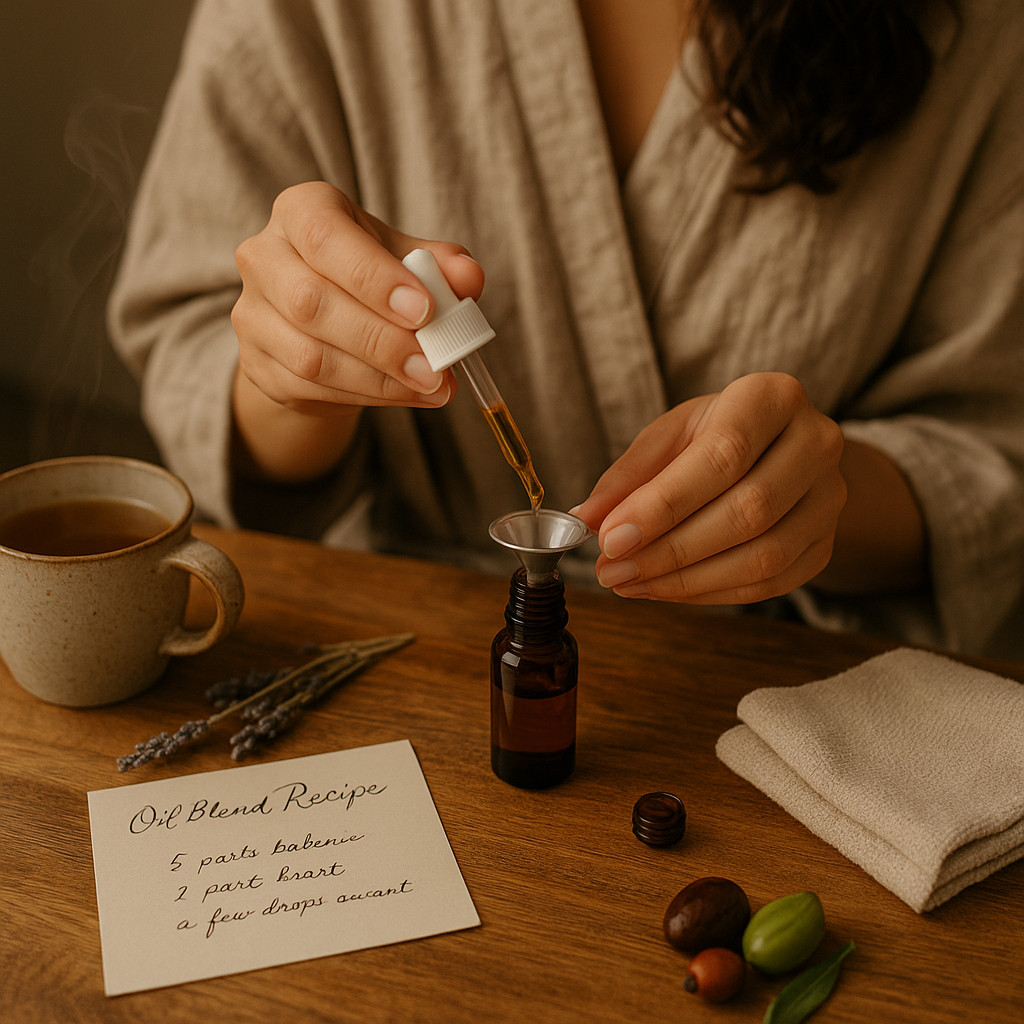
Yes, you absolutely can. In fact, creating your own calming facial oil blend can be a deeply satisfying (and skin-loving) ritual. Think of it as skin alchemy—with less mess and fewer existential questions than baking sourdough.
How to mix them:
- Base: 1 part jojoba, argan, or squalane (balancing and hydrating)
- Heart: 1 part rosehip oil (restorative and nutrient-rich)
- Accent: a few drops of tamanu (targeted support)
Store your blend in a dark glass dropper bottle. Use within 3 months.
How it works:
- Jojoba, argan, or squalane balances and delivers the blend into the skin
- Rosehip nourishes and revives tone
- Tamanu gently calms any hotspots or sensitivities
The beauty of DIY blends is not only in the customization, but in the act of creation itself. You’re not just applying oil. You’re participating in care.
How to Choose the Right Oil for Your Skin
Instead of chasing trends, consider:
- How your skin feels at rest (tight, oily, inflamed?)
- Seasonal needs (dry winters vs. humid summers)
- Sensory preferences (Do you enjoy earthy or neutral scents?)
Slow skincare invites you to listen to your skin—not override it.
How Oils Fit Into a Slow Beauty Routine

- Oils are best applied to damp skin (after toner or hydrosol)
- They can replace or complement moisturizers
- Use them in massage: gentle circles, slow breaths
- One oil is enough. Don’t layer six
This simplicity lets your skin recalibrate. The goal is not stimulation, but support.
Conclusion: Oil as Ritual, Not Remedy
When applied with care, face oils become more than product—they become presence. They mark a pause between day and night. A chance to touch the skin without judgment. To nourish without noise.
And that quiet nourishment, over time, is what slow beauty is really about.